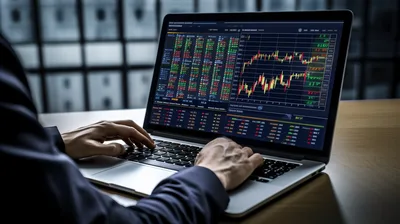
How Leverage-Hungry Traders Are Reshaping Stock Market Structure
Retail investors and quant funds are pouring borrowed money into short-term trades, fundamentally altering how markets move.
The stock market you're trading today looks nothing like the one from a decade ago. Retail investors and quantitative funds have flooded in with leverage — borrowed money — and a fierce appetite for short-term plays. That combination is reshaping price action, volatility patterns, and the very plumbing of how stocks move.
When more players use leverage, small moves get amplified fast. A routine dip can cascade into a margin-call spiral. A squeeze can send a stock screaming higher with no fundamental catalyst. You're not just competing against other humans anymore — you're competing against algorithms designed to exploit exactly the kind of panic that leverage creates.
Read more Ex-White House Staffer Fined for Prediction Market Insider Trading →
Quant funds have turbocharged this shift. Their models are tuned for speed, not conviction. They pile in, extract a tiny edge, and bail — often within the same session. That churn adds volume but strips out the kind of steady, conviction-driven buying that used to smooth out market swings. The result is a market that can feel manic even on quiet news days.
For retail traders, this is a double-edged sword. More volatility means more opportunity — but also more traps. Understanding that leverage-driven flows are driving intraday moves, not just earnings or macro data, changes how you should read charts and size positions. Treat unusual spikes and plunges with extra skepticism; they may have nothing to do with fundamentals.
The takeaway is simple: the rules of engagement have changed. Markets are faster, more reactive, and more prone to violent reversals than at any point in recent memory. Trade accordingly. Continue reading at MarketWatch.com.