XRP Drops 3% as Key $1.15 Support Level Breaks Down
XRP's breakout attempt has stalled after losing critical $1.15 support, sending the token down 3% and raising fresh concerns among traders.
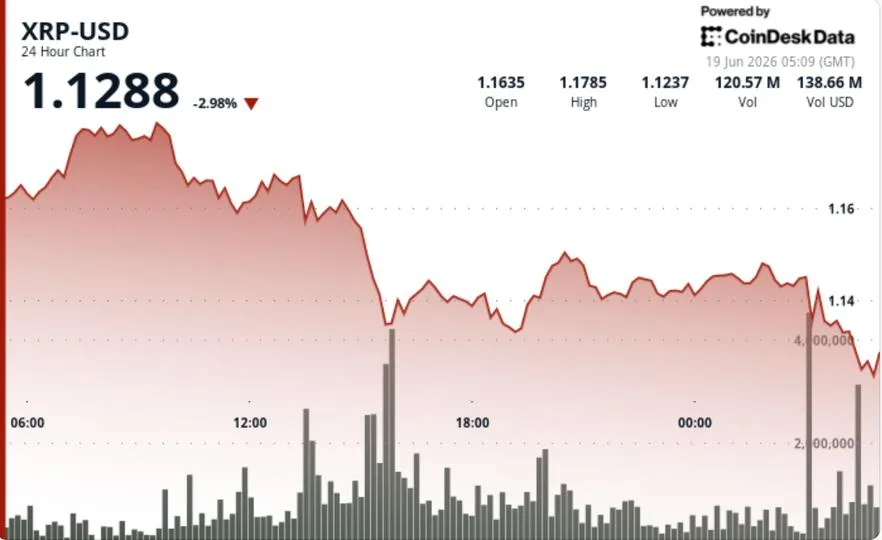
XRP just flashed a warning sign you can't ignore. The token shed 3% after slipping below the $1.15 support level that bulls had been defending — and when support breaks like that, it usually means the easy money on the long side is gone for now.
The failed breakout attempt is the real story here. Breakouts that don't follow through tend to punish late buyers the hardest. If you chased the move higher and didn't cut risk, this is exactly the kind of tape that forces your hand. Watch how price reacts at the next demand zone — that reaction will tell you whether this is a shakeout or the start of something uglier.
Read more BoE's Mann: Fewer Rate Hike Bets Are Why She'd Hike More →
From a technical standpoint, losing $1.15 flips what was support into potential resistance. That means any bounce back toward that level could get sold. Traders need to be honest with themselves: the burden of proof now sits with the bulls to reclaim that level decisively, not just tap it and fade again.
Momentum traders who thrive on clean setups should probably step aside until the structure clarifies. Choppy, failed-breakout environments are where accounts get ground down. Patience here isn't weakness — it's the trade.
Continue reading at CoinDesk.